
Countess From Minneapolis
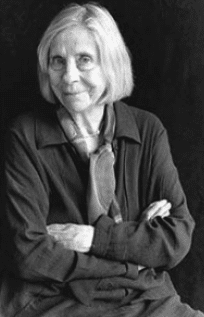
Barbara Guest
By Farzan Navab
Persians In Minneapolis
They are lithe, slim, dark. They
travel up and down the elevators all
the way to the thirtieth floor like slim
geniis emerging from their bottles.
No one knows why they are in Minneapolis
The spring leaves which are thin and small
like Persians are closer to them
than anything else in the vast
brokenness of upset structures.
These Persians have a continuity which they
have left somewhere else and
this makes for surprise and
puzzlement. Not only for the
Persians, but for us who stand so
tall and thick beside them in
the elevator admiring Persian determination
and finally not finding it reasonable without rugs beneath its feet.
Barbara Guest. The Countess from Minneapolis, 1976
The Bicentennial Year
1976 was also the year I arrived in the U.S. The flight from London to Chicago arrived at 10:00 PM on February 26, 1976 and I had fallen asleep! I opened my eyes to an empty plane. Perhaps in my subconscious I was afraid of arriving in a new country, a totally unfamiliar place with my limited language skills. Simply put I didn’t want to wake up or leave the plane.
Six months later I was a student at Minneapolis College of Art and Design. There, a teacher named Richard (Dick) Shaw, who taught English literature as well as theatre, helped me learn English composition and a few things about Shakespeare, and introduced me to his own rendition of the Sleeping Beauty.
The Poet Teacher
Dick Shaw was a Minneapolis poet and playwright and he was the one who put away my fear of learning and writing in English. Perhaps I never learned the language to his satisfaction but I took in his advice that writing for a foreign student could be akin to speaking. That an art student could learn how to write a paper, say on Edward Hopper or Georgia O’Keefe, as he or she studied and learned about their work. There was no need for fluff, heavy words or too many exclamation marks. Never mind that my knowledge of English at the time was meager and-to this day- remains in definite need of polishing.
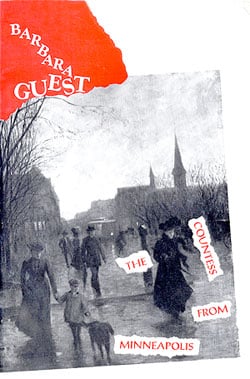
It was Dick Shaw who gave me the book, The Countess From Minneapolis by New York School(Frank O’Hara, John Ashbery, James Schuyler)poet Barbara Guest. “There’s something in there for you” he said. I briefly looked at the book and thanked him. At first glance I didn’t even notice the book’s relevance to me and then I put it away. It took me years to once again page through the book, read the poem Persians In Minneapolis, ponder its meaning and its richness, and appreciate Dick’s gift.
Minneapolis Connection
Barbara Guest never lived in Minneapolis but had visited the city at the suggestion of her close friend Mary Abbott, the New York Abstract Expressionist painter, who taught at the University of Minnesota from 1974 to 1977. In fact the book’s title, The Countess from Minneapolis, was the nickname Guest had given to Mary Abbott!
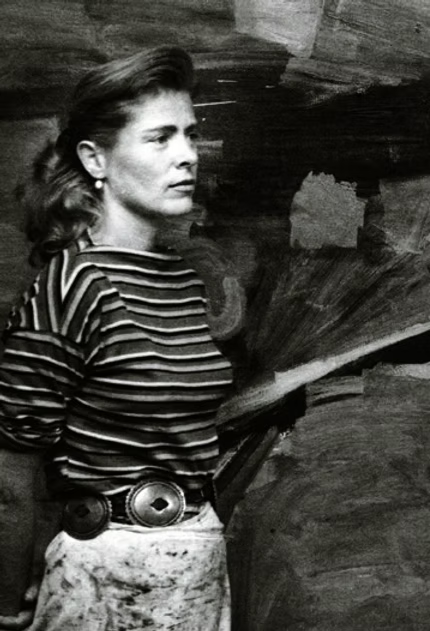
The Real Countess From Minneapolis, the painter Mary Abbott
Why Persians?
The poem seems to be a simple, compact, lyrical, mystical and heartfelt observation about encountering a Persian in Minneapolis. In some ways it is a page out of the Arabian Nights. Was Guest surprised to see a Persian in Minneapolis? Did she think that Minneapolis would be the last place to encounter a Persian in America? One pulled from the depth of history. One taken out of the battle of Thermopylae where in 480 BC Xerxes, the Persian king, is said to have torched and “evacuated Athens and overrun most of Greece.” Or was it the Arabian Nights itself, in which Scheherazade, the legendary Persian Queen saves her own life and the lives of other women by telling endless stories to her husband king Shahryar?
Shakespeare And Others
We will never know the answer to these questions but Dick too must have known a few things about the Persians. Firstly from all the references(most people have never heard of)to Persians by none other than Dick’s master William Shakespeare. There are for example references-albeit allusions-to Persians in The Merchant Of Venice(the Prince of Morocco’s dark complexion and exotic speech alludes to Persians or Eastern connections), Twelfth Night (Sophy), Henry IV, Part 2(Falstaff mentions King Cambyses’ vein), A Comedy of Errors(A merchant mentions needing money for voyage to Persia). Secondly Dick Shaw could have been familiar with a few references to Persia in the poetry of Walt Whitman(A Persian Lesson, Leaves of Grass 1891-1892) or the translation of Hafiz by Ralph Waldo Emerson or Edward FitzGerald’s translation of the Rubaiyat of Omar Khayyam. Finally Dick was aware of Persia, or in any case Iran, through his encounters with Iranian students at the university or a few Iranian colleagues and students over years of teaching at Minneapolis College of Art and Design.
Dick Shaw
Dick who passed away at 88 in 2019 was many things other than a professor. First and foremost he was a great human being, a keen observer of human condition. Secondly he was a wonderful poet of simple and efficient words. But he was also a playwright, dramaturge with a wonderful theatric imagination. Dick was associated with the U of M, the Mpls. College of Art and Design, the Children’s Theater Company, the Folger Shakespeare Library, Poets in the Schools, and early iterations of the Loft and Playwrights’ Center.
As for the poem itself, I shall reflect that, after so many years as a rug dealer, I understand and appreciate Barbara Guest’s use of the rug metaphor as a symbol of “Persian determination.”